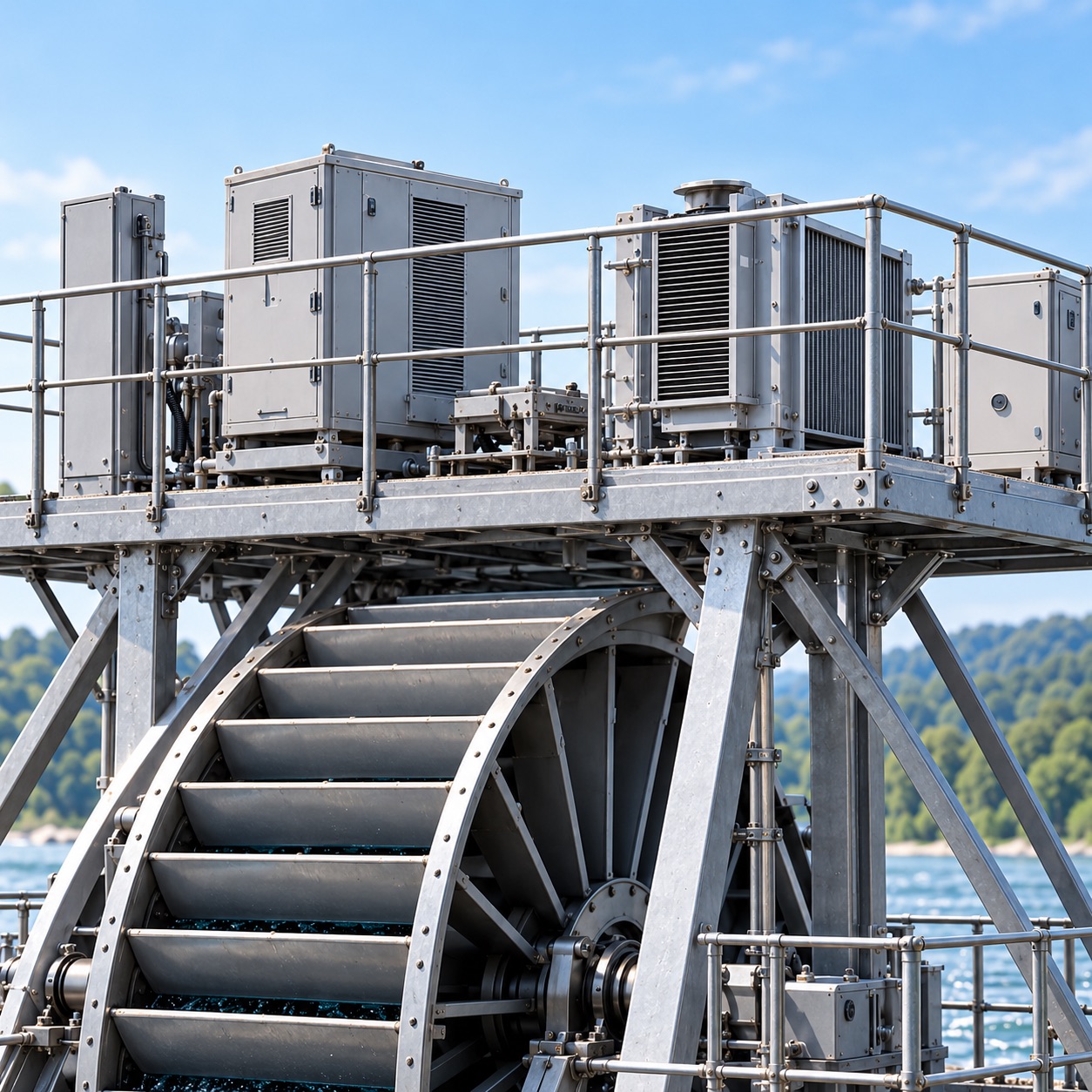
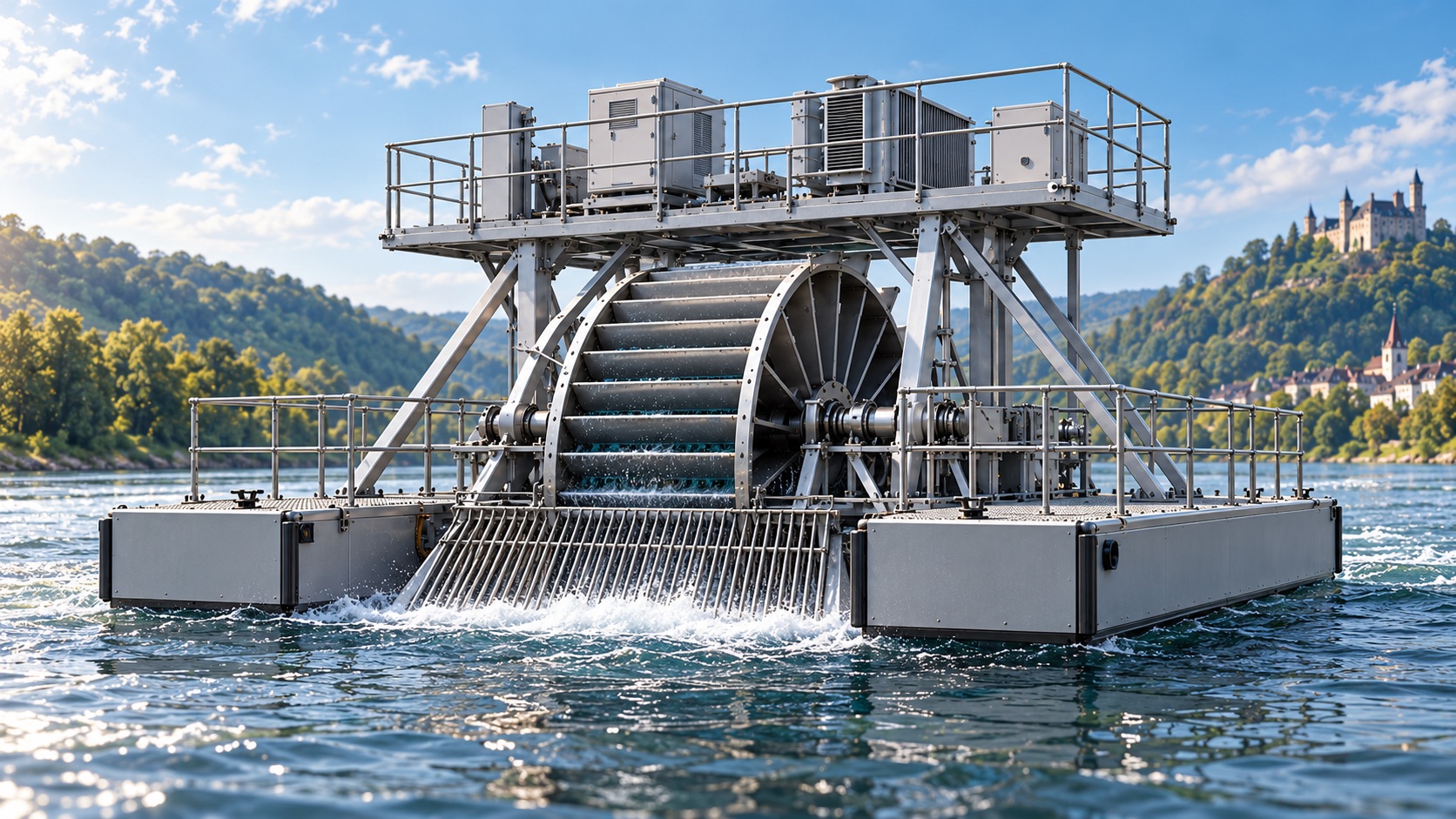
Active Water Wheel
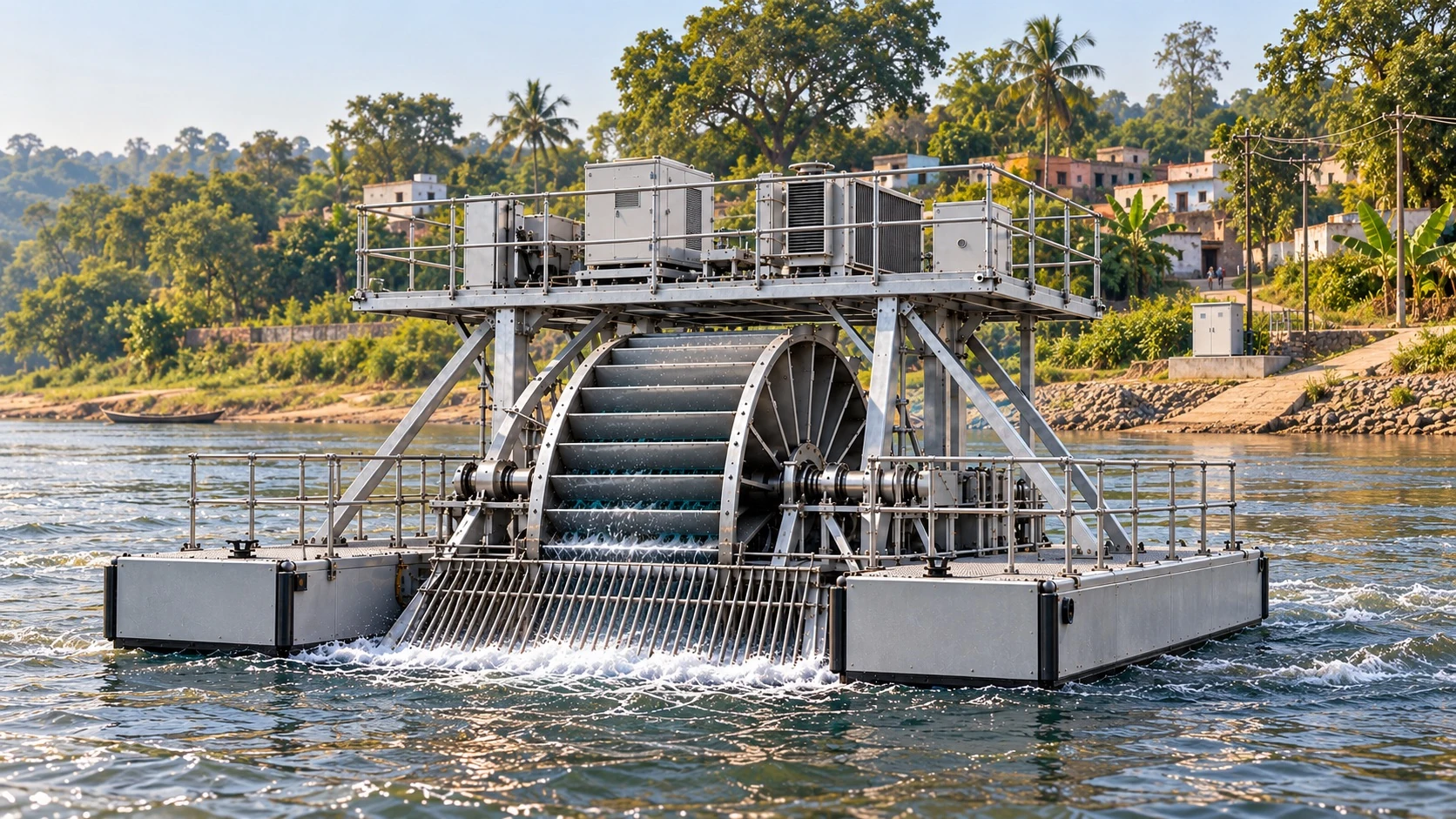
The central water wheel captures kinetic energy from river flow and transfers it into the mechanical drivetrain.

MODULAR RIVER ENERGY INFRASTRUCTURE
SCHIFFSMÜHLE develops RIVER Technology — Renewable In-stream Velocity Energy Recovery — a modular platform that converts the kinetic energy of flowing water into locally usable electrical power. At its core is MARC — the Modular Adaptive River Converter — a floating energy converter built for site-specific deployment and scalable infrastructure.
For centuries, floating ship mills used the natural current of rivers without requiring a permanent hydropower structure across the waterway. SCHIFFSMÜHLE takes that fundamental principle and transforms it into a modern energy architecture.
RIVER Technology brings the concept into a new generation of decentralized power generation. MARC performs the physical energy conversion in the river, while modern control, protection, power and infrastructure systems turn the principle into a modular energy platform.
Historic origin. Modern technology. New infrastructure.
RIVER TECHNOLOGY
RIVER stands for Renewable In-stream Velocity Energy Recovery. RIVER Technology is the technology platform behind SCHIFFSMÜHLE — from capturing natural river flow through mechanical and electrical conversion to integration into local energy infrastructure.
RIVER Technology converts the kinetic energy of flowing water through modular MARC converters into electrical power. The system does not end at the generator: energy capture, control, protection, power management, electrical transfer and site infrastructure form one integrated architecture.
MARC uses the natural flow of the waterway as its primary energy source. The active water wheel transfers kinetic energy into the converter’s mechanical system.
Hydraulic guidance, immersion depth, mechanical transmission and generation form a controllable conversion chain from river flow to electrical power.
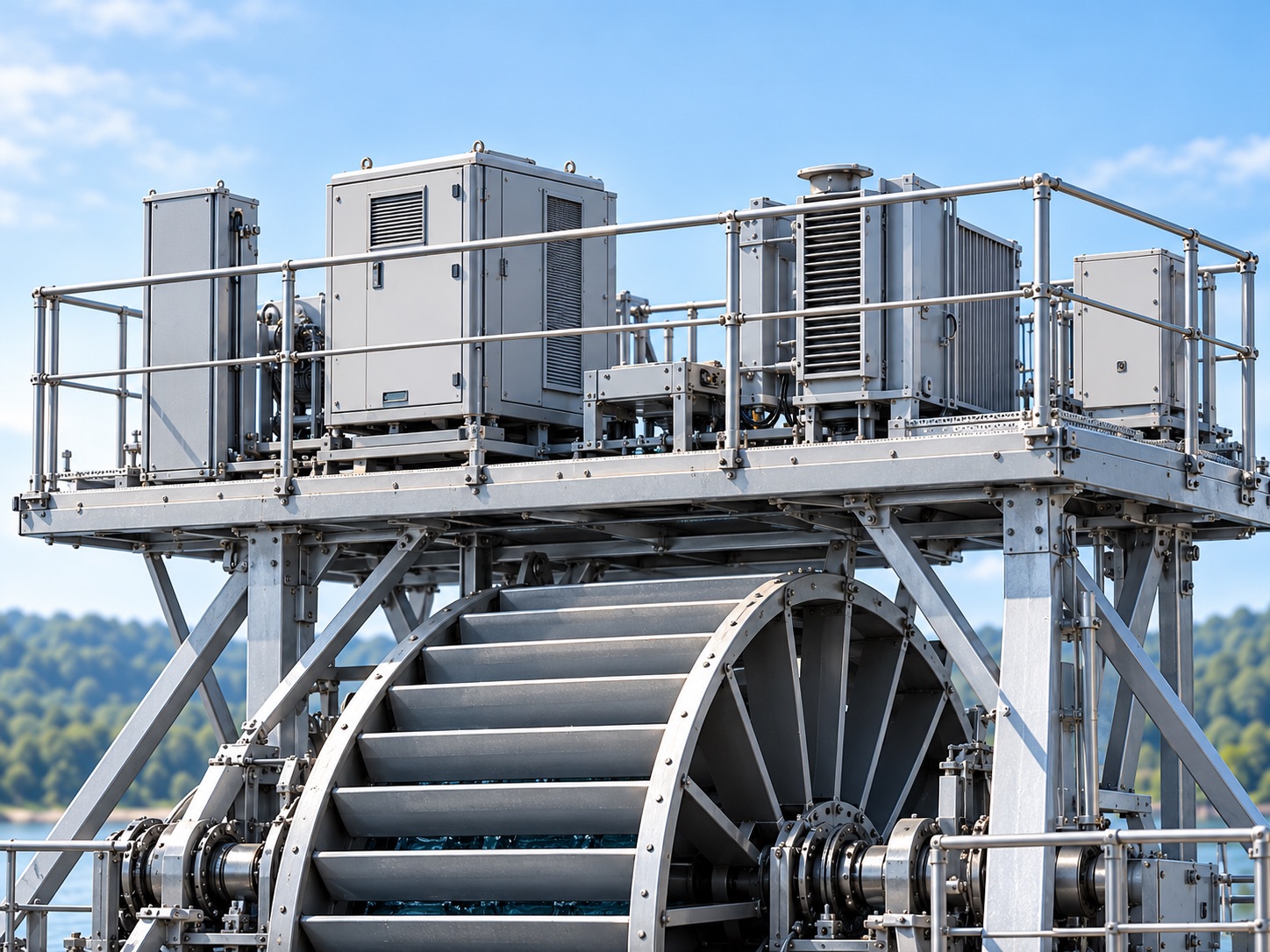
The Superstructure Platform integrates power conversion, power electronics, control, instrumentation, communications and additional technical systems.
Through a protected electrical connection to shore, MARC becomes part of a complete RIVER Station, supplying grid, direct use, storage or local applications.
More than energy conversion. A platform for energy infrastructure.
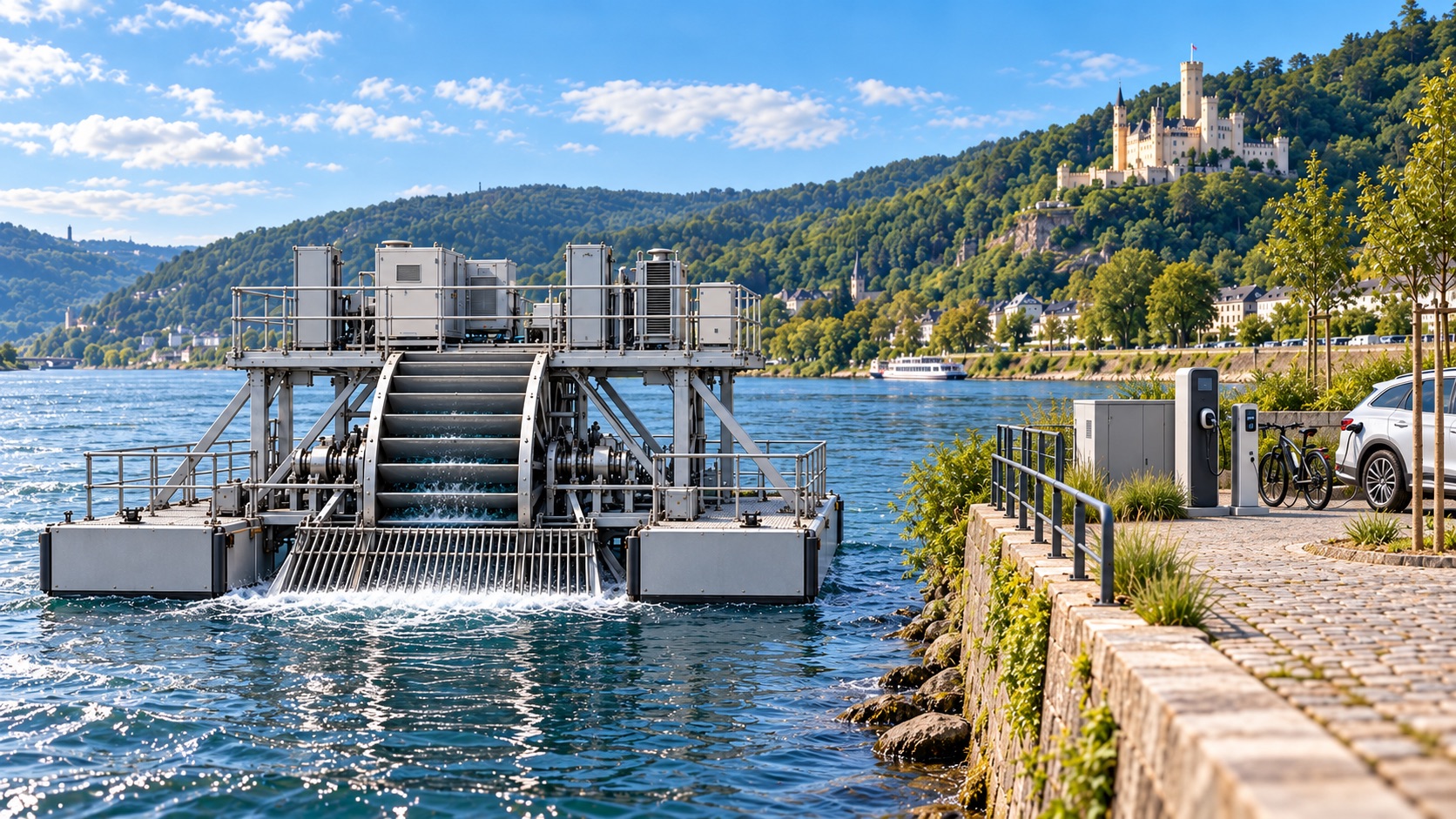
MARC — MODULAR ADAPTIVE RIVER CONVERTER
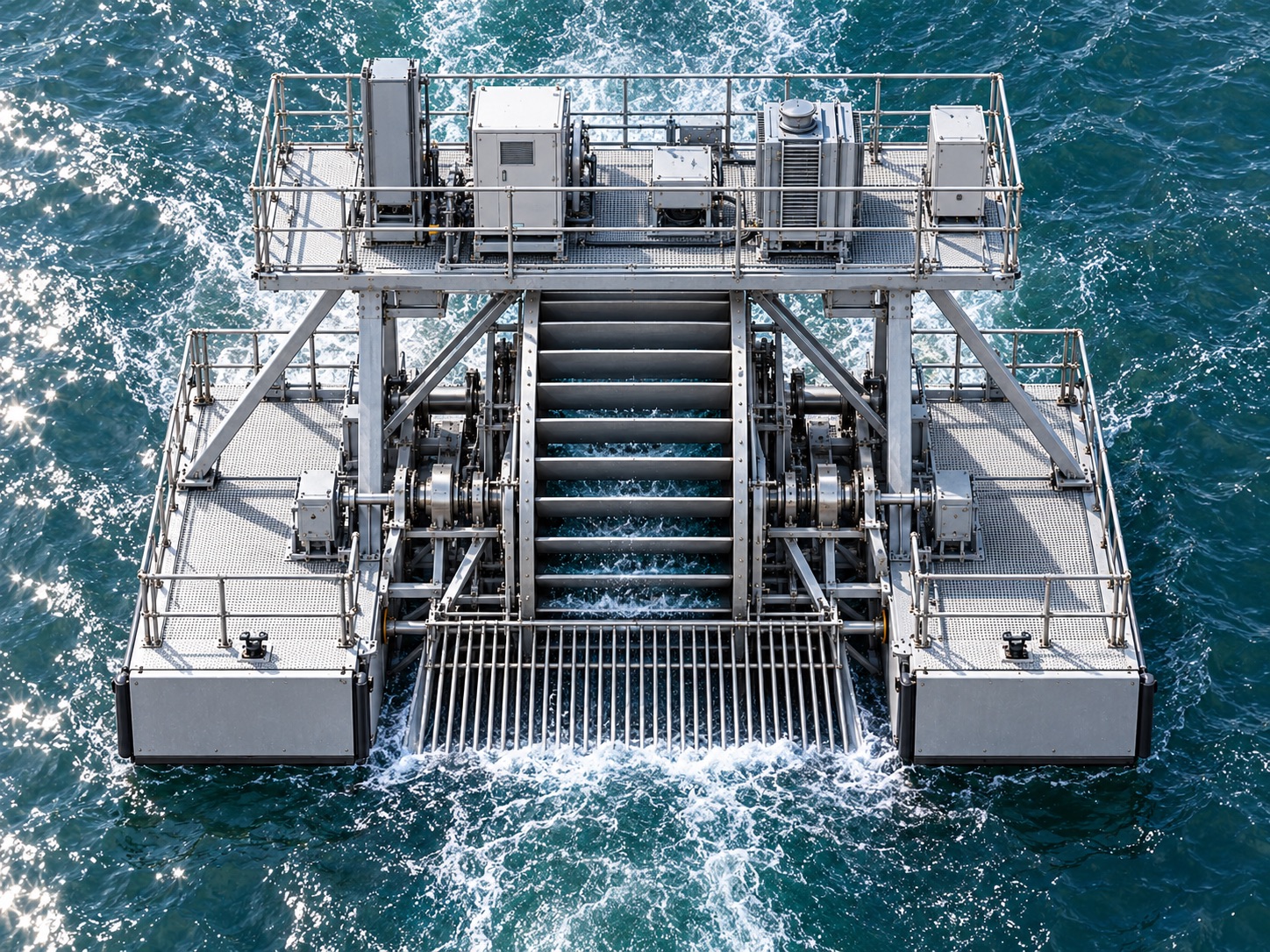
MARC stands for Modular Adaptive River Converter and forms the physical energy unit of RIVER Technology. Its floating architecture combines the support structure, active water wheel, flow guidance, protection systems, mechanical drivetrain, generator and technical Superstructure Platform in one modular system.
MARC converts the kinetic energy of river flow into electrical power while creating the technical foundation for control, power management and site-specific extensions.
The central water wheel forms the active part of the converter. River flow drives the wheel and transfers kinetic energy into the mechanical drivetrain.
Guidance and protection elements direct the current toward the active converter area and reduce the direct entry of larger objects. The architecture adapts to different site conditions and immersion depths.
The Superstructure Platform creates technical space above the active water wheel for generation, power electronics, controls, instrumentation, communications, storage and other site-specific modules.
One modular converter. An open technical platform. Multiple applications.
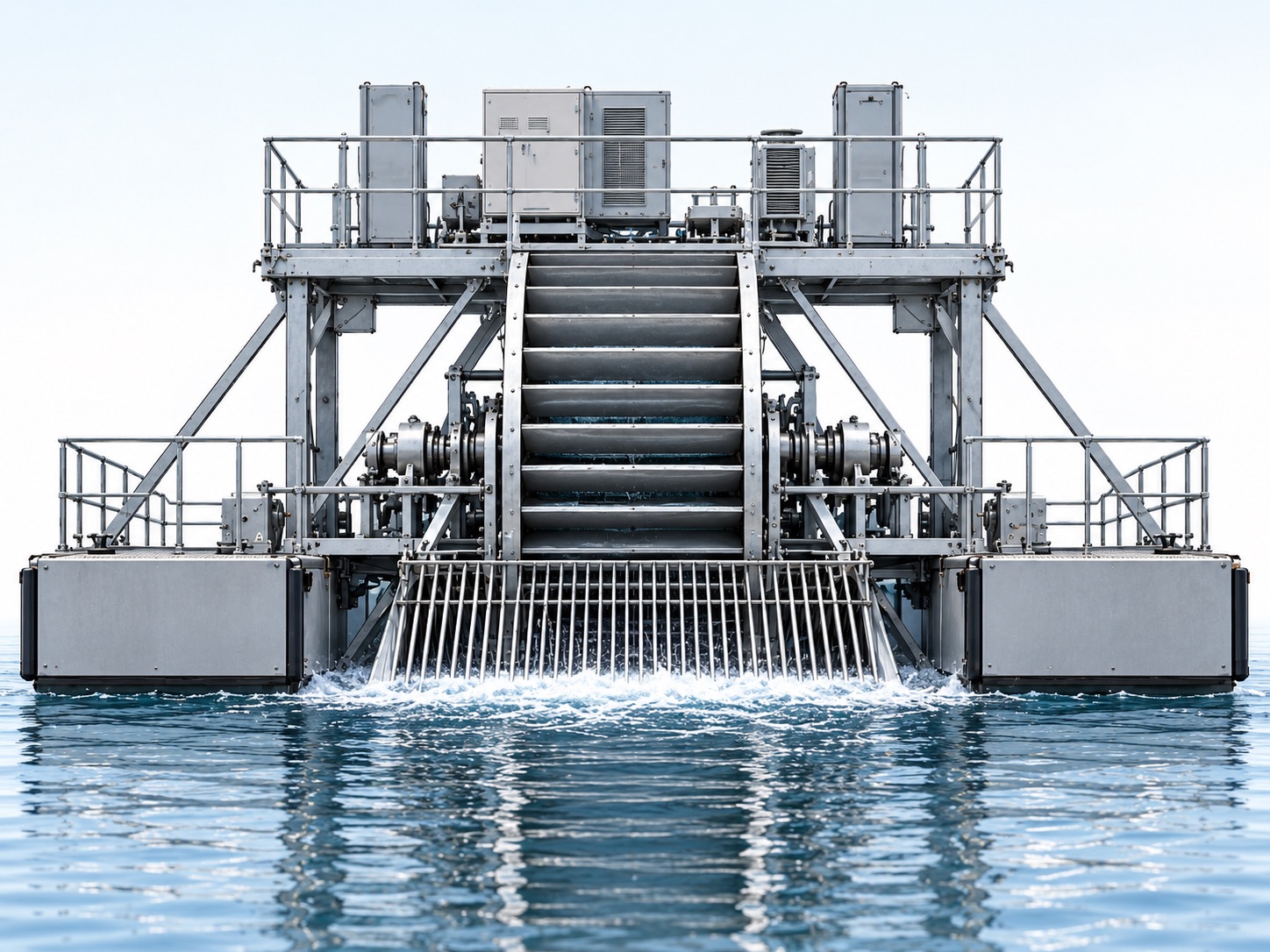
MARC SYSTEM ARCHITECTURE
MARC combines energy conversion, a floating support structure, protection systems and technical expandability in one integrated architecture. Its components are engineered to operate as a coordinated system in the water while providing flexibility for site-specific adaptation.
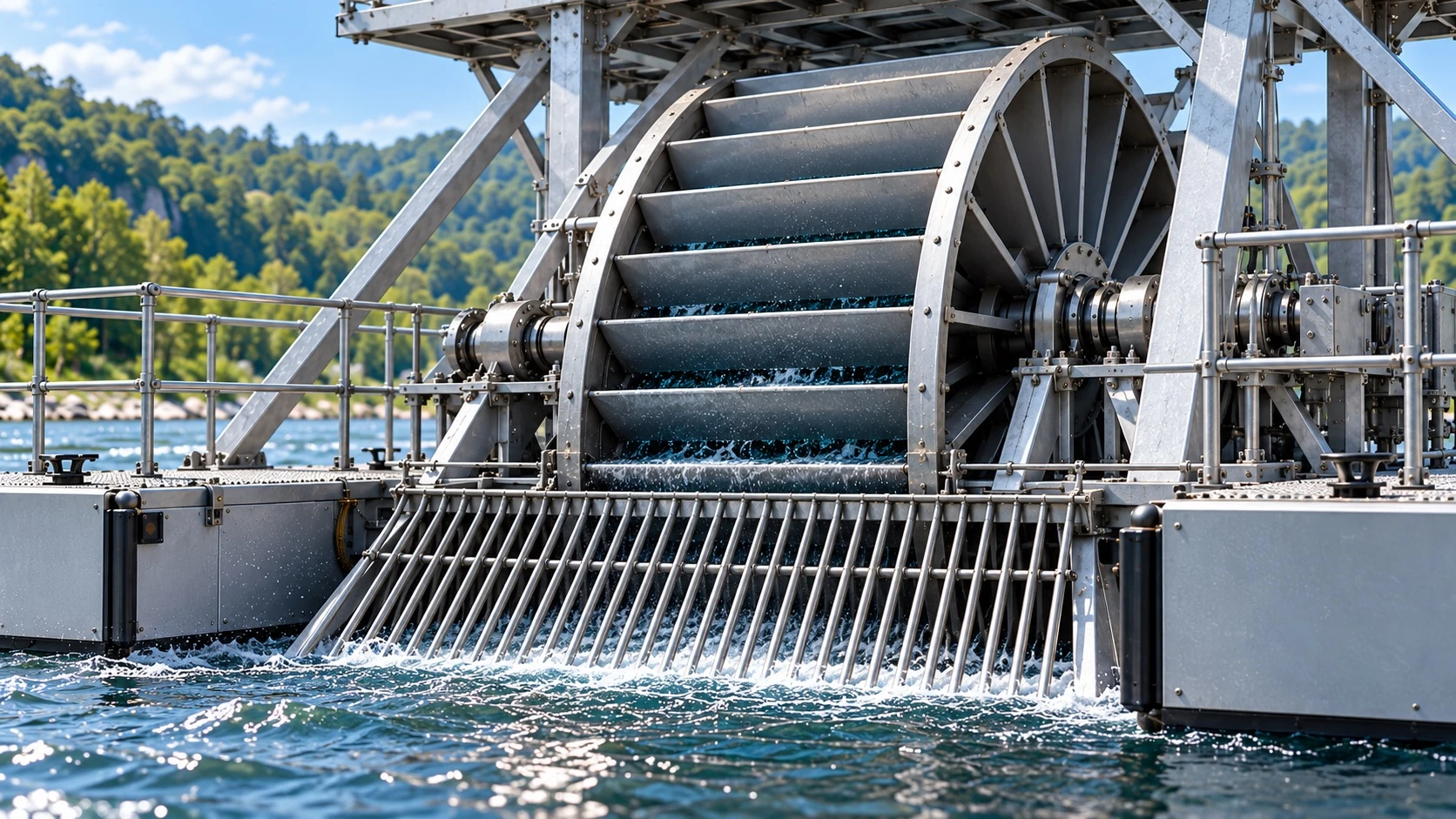
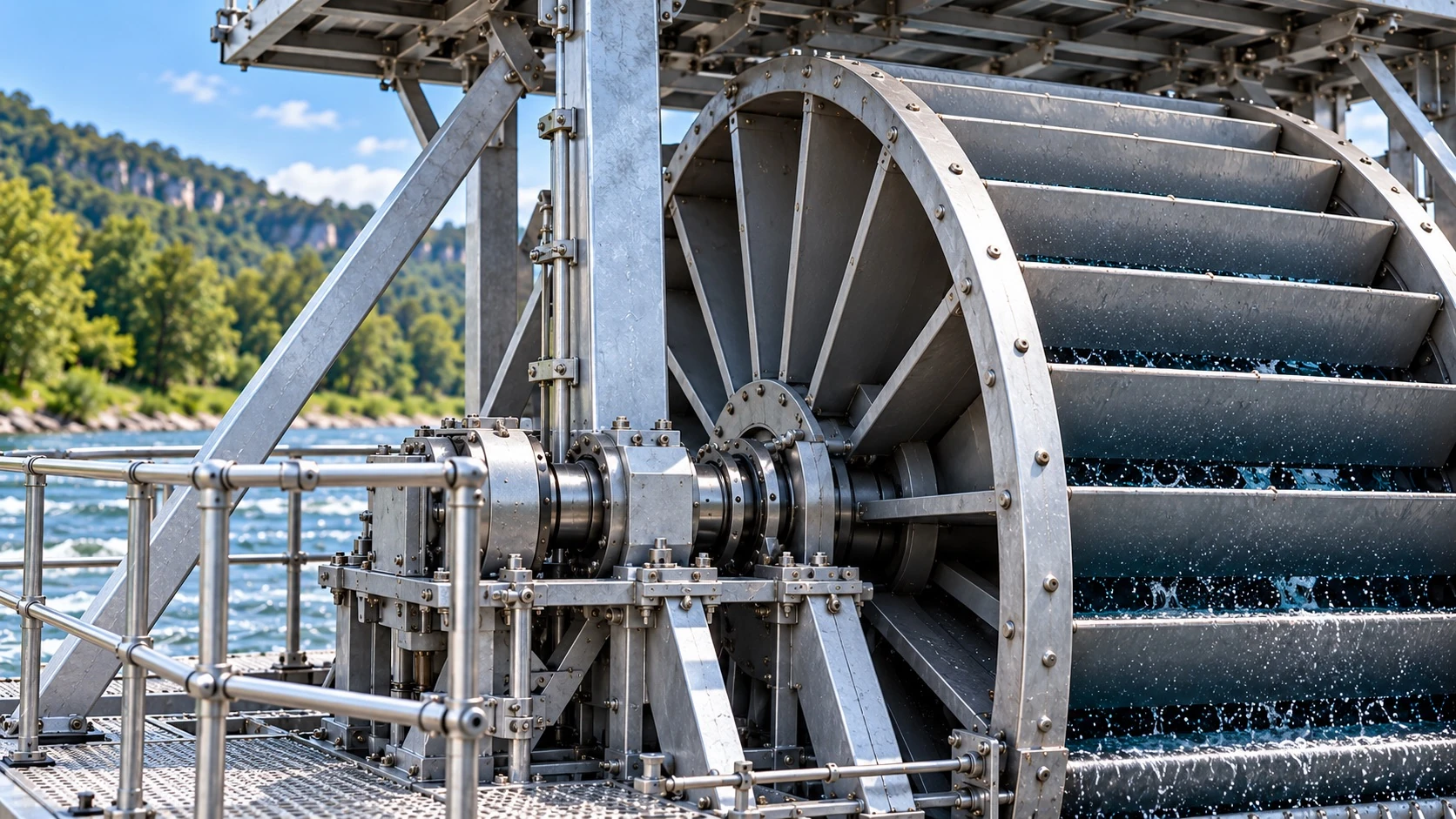
The central water wheel captures kinetic energy from river flow and transfers it into the mechanical drivetrain.
The floating support structure carries the converter and forms the structural base for the water wheel, protection systems and Superstructure Platform.
Protection and guidance elements reduce the direct entry of larger objects into the active zone and support controlled flow guidance ahead of the water wheel.
The upper platform provides technical space for generation, power electronics, control, instrumentation, communications, storage and other site-specific modules.
The energy unit operates as a floating structure and can adapt within its system limits to changing water levels and site conditions.
Mechanical, electrical and infrastructure components are organized as defined system areas and can be configured for site-specific requirements.
The Superstructure Platform extends MARC beyond energy conversion and creates space for additional technical functions directly on the converter.
More than a water wheel. A modular energy platform in the river.
Concept visualization of the current MARC architecture. Technical details and site-specific configurations are refined through further engineering.
RIVER STATION
A RIVER Station connects one or more MARC converters with the technical infrastructure on shore. It transfers electrical power generated in the river through a protected connection to land and integrates it into a site-specific energy and application system.
RIVER Technology therefore does not end at the water wheel or generator. The RIVER Station forms the infrastructure layer between power generation in the river and its practical use.
MARC operates as a floating energy unit. Site-adapted anchoring and positioning keep the converter within its intended flow area and provide the mechanical interface to the location.
Generated electrical power is transferred to shore through a protected underwater connection. Cable routing, conduits, shore transition and safeguards are engineered for site conditions.
On shore, electrical infrastructure handles power transfer, protection, metering, control and, where required, transformation.
Generated power can be supplied to the public grid, consumed directly on site, stored or provided for applications such as charging infrastructure.
MARC generates power. The RIVER Station makes it usable.
ENERGY APPLICATIONS
RIVER Technology generates electrical power directly at the river site. Through the RIVER Station, that energy is integrated into different use pathways — from grid supply and direct consumption to charging infrastructure, storage and additional energy-intensive applications.
The right configuration is determined by the site: available river energy, local infrastructure, demand profile and the economic use case are considered as one integrated system.
RIVER Stations can supply electrical charging infrastructure for vehicles, bicycles, municipal mobility and other electric applications.
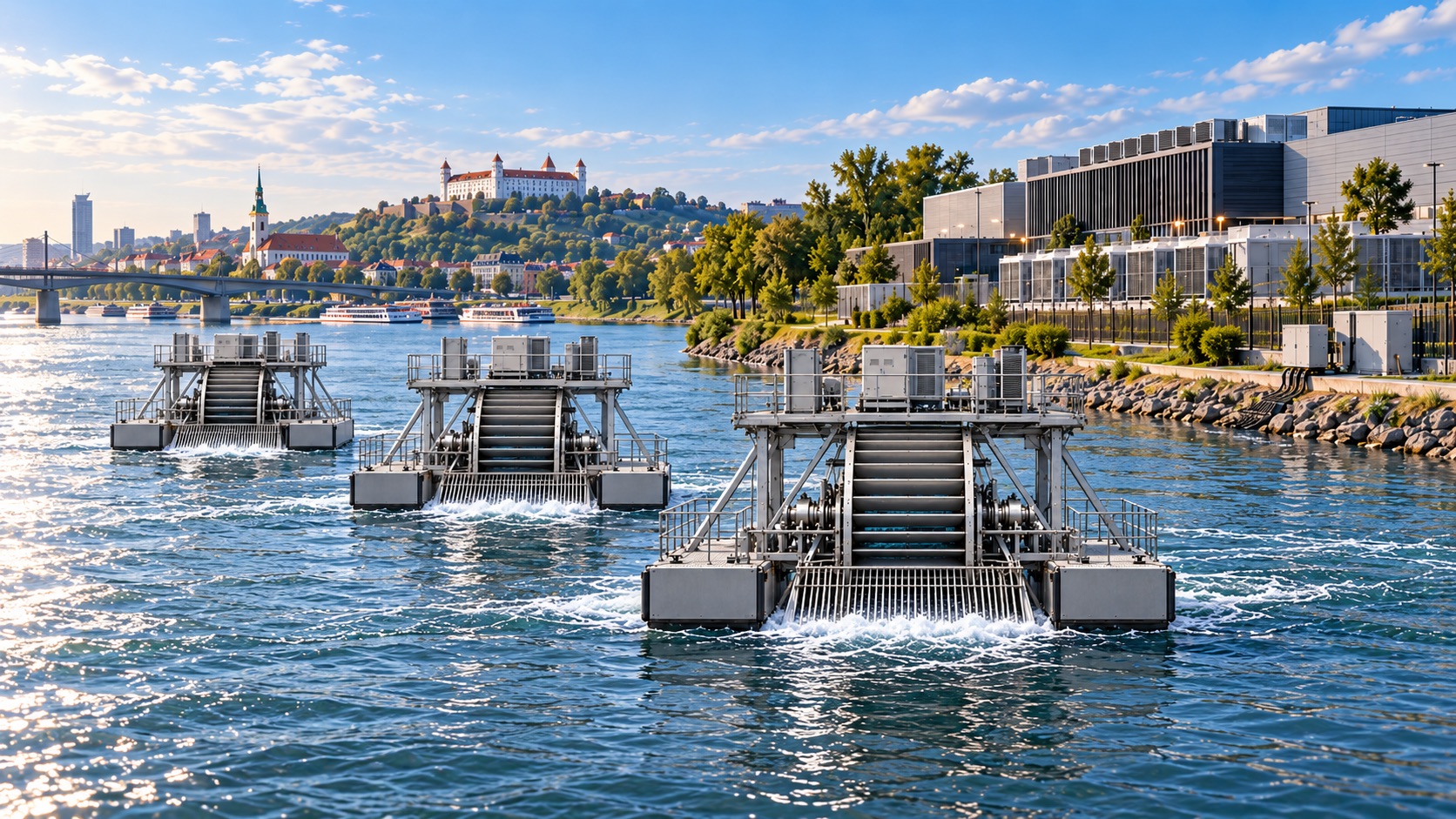
The modular architecture enables power to be supplied directly to digital infrastructure and local computing applications. High-availability uses combine generation, storage, grid access and load management.
Generated electrical power is conditioned, protected and transferred through the RIVER Station to local power infrastructure at a defined point of connection.
Energy can be consumed directly near the generation site — for example by commercial facilities, industry, municipal infrastructure or other local users.
Battery storage can separate generation and consumption in time, manage power peaks and extend local use of generated energy.
Electrical power from a RIVER Station can be integrated into broader energy systems, including electrical processes and Power-to-X applications.
The technology generates energy. The site determines where that energy creates the most value.
One energy source. Multiple pathways to value.
MODULARITY & SCALE
RIVER Technology is built around a modular architecture. A single MARC forms the smallest operational energy unit. Multiple converters can be combined into MARC Arrays and integrated through a RIVER Station into local energy infrastructure.
As the number of suitable sites grows, this architecture can expand into a RIVER Network — a scalable structure of decentralized, comparable energy projects.
The modular converter and physical base unit of RIVER Technology.
Multiple coordinated converters with positioning and spacing adapted to hydraulics, waterway geometry and site conditions.
A complete energy site integrating MARC, station keeping, protected power transfer, shore infrastructure, energy management and use.
Multiple RIVER Stations using shared data, operating standards, service processes and repeatable system architecture.
Scale is not only about size. Scale is about repeatability.
One converter. One array. One site. One network.
PERFORMANCE & ENERGY POTENTIAL
The kinetic power available in river flow increases with active flow area and, most importantly, with flow velocity. For RIVER Technology, no two locations deliver the same performance — but suitable flow conditions can provide substantial energy potential.
MARC is therefore engineered around a site-specific performance model combining flow velocity, active area, immersion depth, conversion efficiencies and electrical system losses.
A = effective flow area · v = flow velocity
The current MARC-A20 engineering reference uses an effective flow area of 20 m². Under the present mid-case engineering model, a flow velocity of 2.0 m/s results in approximately 19.5 kW of net electrical power.
Site economics are not determined by performance at a single flow velocity. Flow profile, technical availability, system configuration and local energy use together determine usable annual energy yield.
Understand the flow. Model the performance. Evaluate the site.
These values are used for technical screening and development. They do not represent guaranteed performance or a future MARC product rating.
PILOT & VALIDATION
The physical principle of extracting energy from river flow is well established, and the fundamental SCHIFFSMÜHLE concept has already been demonstrated at small scale. The next development step is to translate this foundation into an instrumented MARC prototype and subsequently into a first RIVER Station under real river conditions.
The pilot is not intended to prove the underlying physics again. Its purpose is to measure and optimize the technical design and generate the data required for product development, site engineering, economics and future scale.
Calculation defines the potential. Measurement builds confidence.
The next milestone is clear: build MARC, measure its performance and validate it as a RIVER Station in real operation.
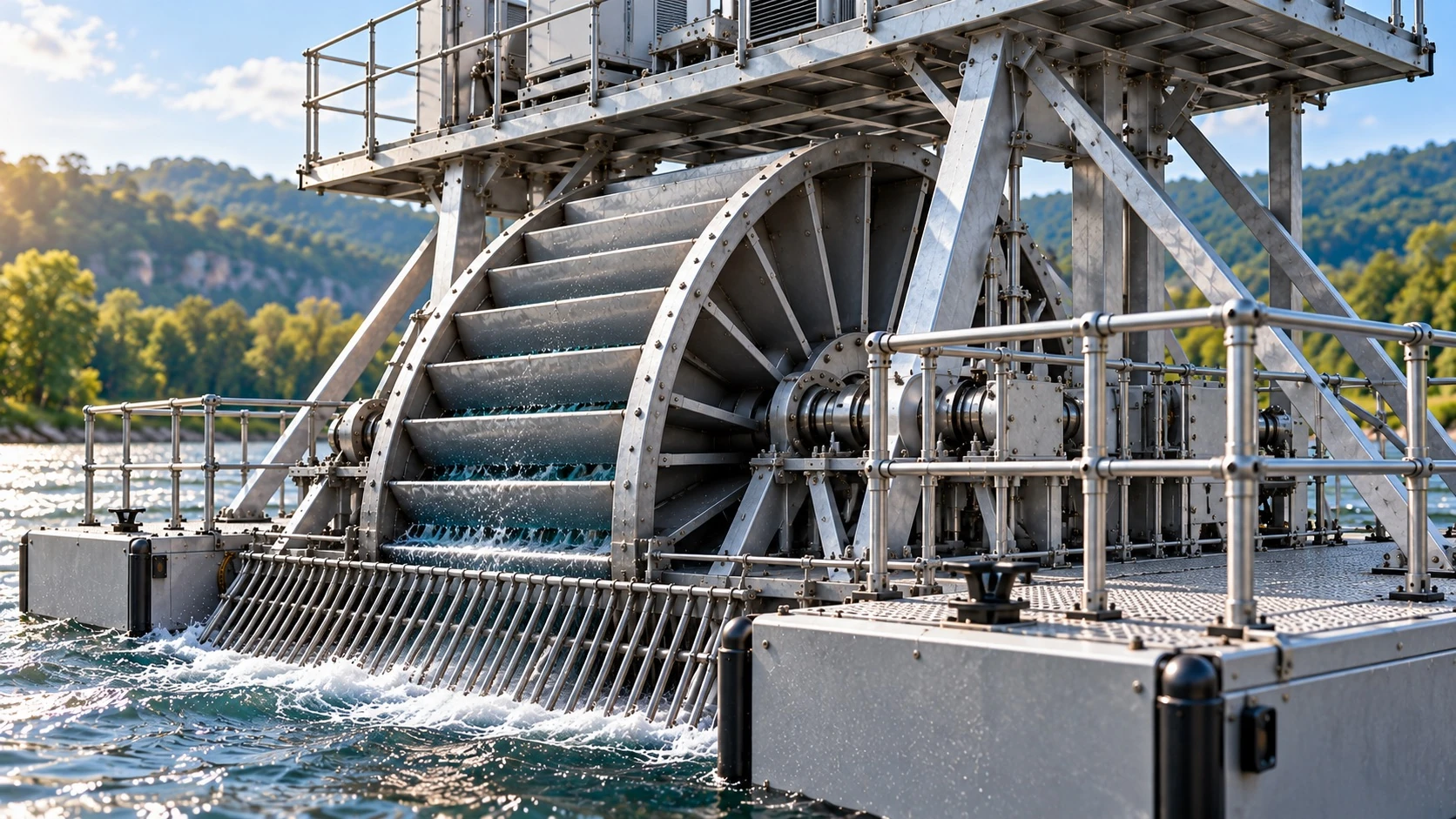
Geometry, active area, immersion depth, drivetrain, generator, protection systems, Superstructure Platform and electrical interfaces become a controlled measurable reference.
Flow velocity, rotational speed, torque, mechanical power, electrical output, system losses and operating conditions are measured at defined points.
Positioning, station keeping, changing water levels, debris, protection systems, power transmission and service access are tested as one integrated system.
Validated MARC technology is combined with protected power transmission, shore infrastructure and a defined energy application.
MARKETS & DEPLOYMENT
RIVER Technology is not tied to a single country or one specific type of river. What matters are suitable flow conditions, waterway geometry, infrastructure, permitting feasibility and an economically viable path for using the generated energy.
Germany and Europe, India, the United States and selected African markets offer different environments for validation, pilot deployment and future scale.
A demanding environment for technical validation and first reference projects, combining high engineering standards, advanced power infrastructure and industrial partners.
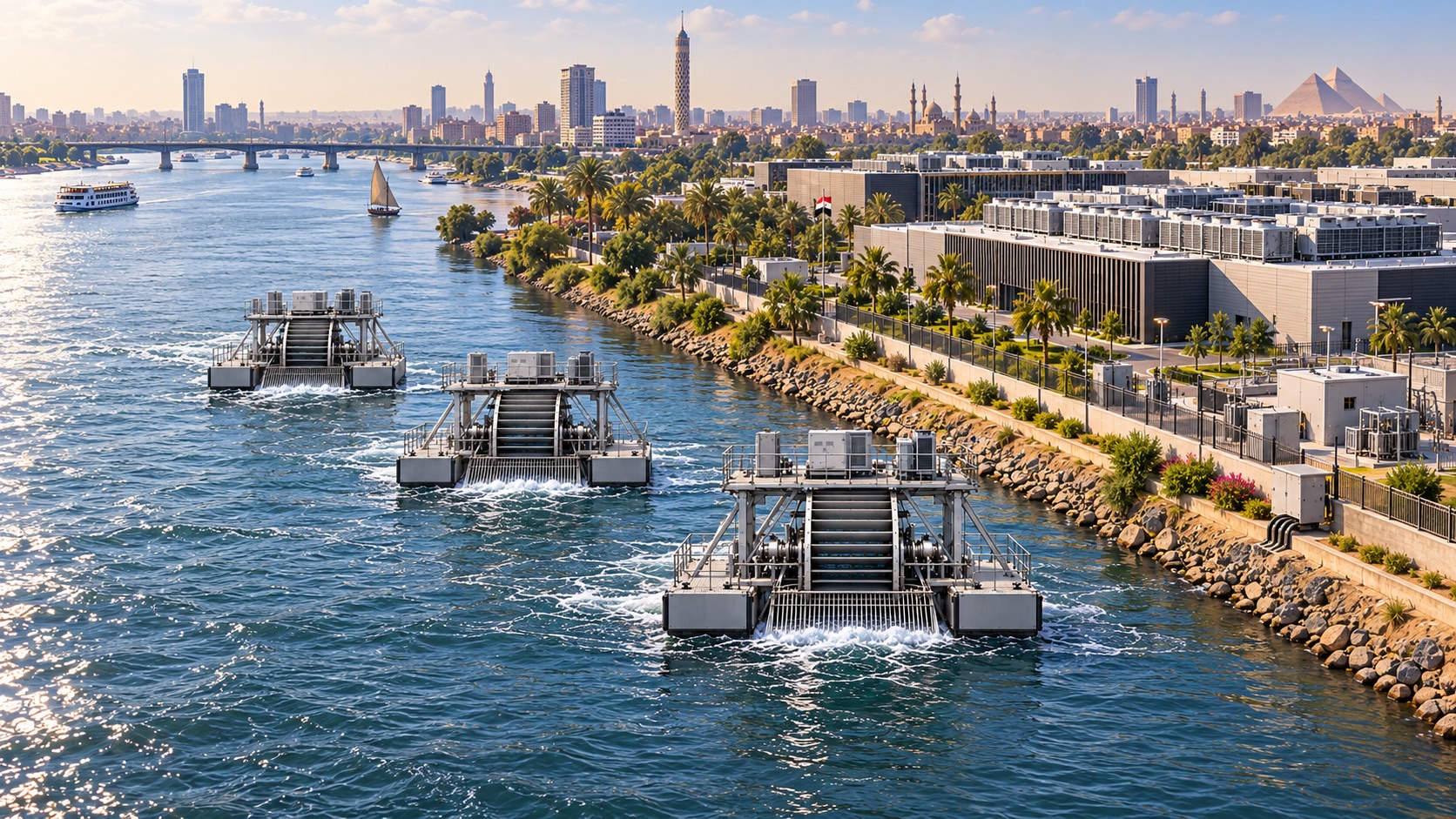
Growing energy demand, constrained grid infrastructure in many regions and extensive water infrastructure create relevant opportunities for decentralized energy projects and development partnerships.
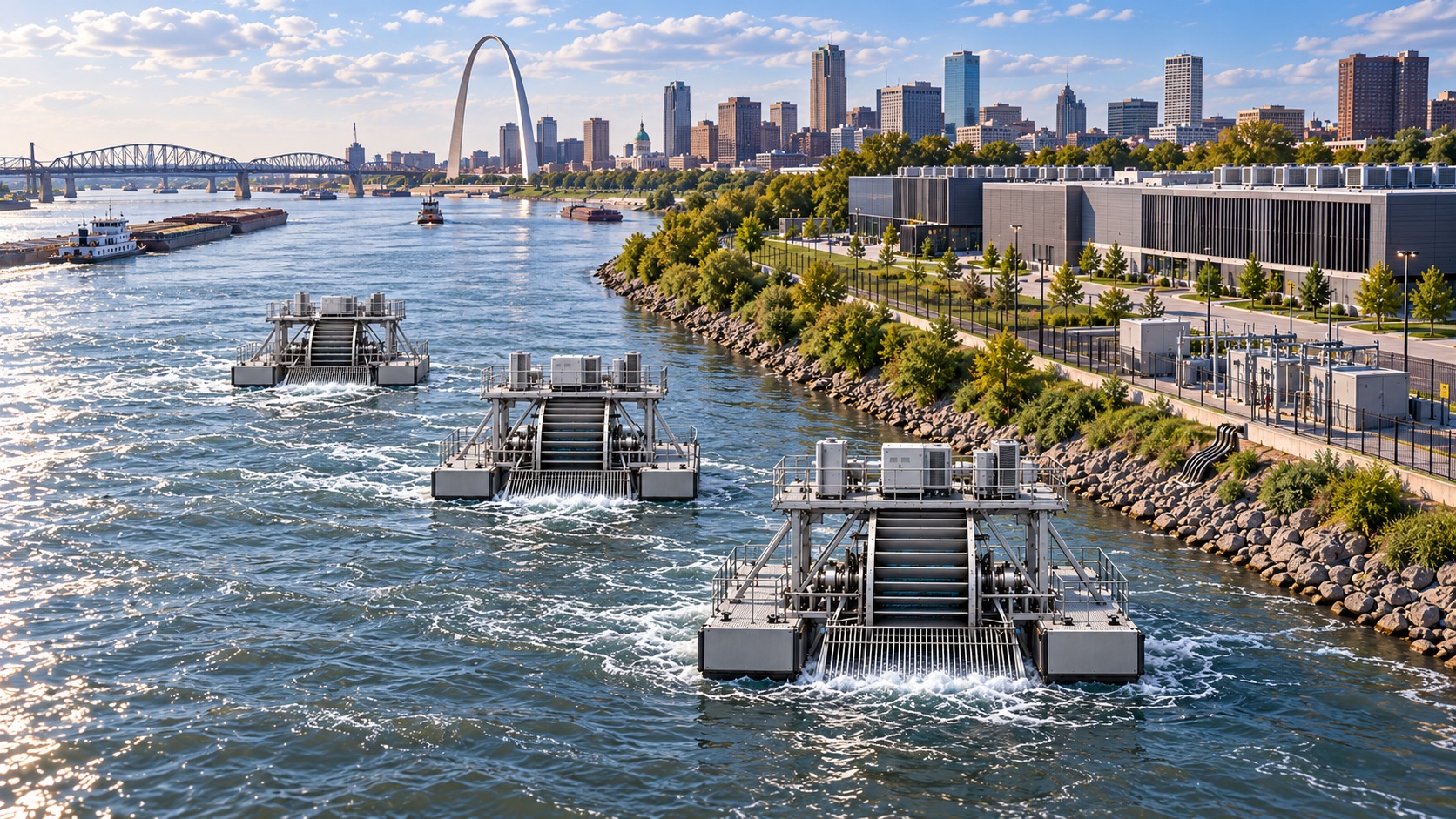
Regulatory experience with hydrokinetic technologies and specialized locations create a relevant environment for validation and decentralized use cases.
High energy demand and extensive water, canal and transport infrastructure create partner-led opportunities for decentralized generation and local applications.
Not every waterway is an energy site. The right location brings together resource, technology, infrastructure and use.
Engineered locally. Scalable internationally.
PARTNERSHIPS & DEPLOYMENT
RIVER Technology connects river energy with real infrastructure. That requires more than a converter: suitable sites, technical integration, permitting, energy offtake, financing and industrial execution must come together.
SCHIFFSMÜHLE is therefore designed as a technology platform for collaboration with energy companies, infrastructure operators, public-sector organizations, engineering partners and capital providers.
Develop pilot locations, integrate decentralized generation into portfolios and progress from reference projects to multi-site deployment.
Ports, waterways, canals and industrial locations can connect river energy with practical local applications.
Mechanical engineering, electrical systems, power electronics, steel construction, station keeping, cable infrastructure and manufacturing form the industrial foundation.
Decentralized river energy can connect with local infrastructure, mobility, energy supply and site development.
Technology investment, project capital, strategic participation and development finance can support different stages of deployment.
Data centers, edge compute and AI infrastructure can combine local power generation with storage, grid access and load management in one integrated energy system.
Technology alone does not build infrastructure. Partnerships do.
WHY SCHIFFSMÜHLE. WHY NOW.
Rivers move enormous volumes of water every day. That movement represents an existing energy resource. RIVER Technology unlocks part of this potential through modular infrastructure that generates power where natural flow, site conditions and energy use come together.
SCHIFFSMÜHLE combines a well-established physical principle with modern engineering, control and energy infrastructure. The next step is not to invent the principle, but to validate, optimize and translate it into a repeatable energy system.
RIVER Technology uses the natural movement of flowing water. The primary resource is already moving through the site.
RIVER Stations can be developed where river energy intersects with grid infrastructure, industry, mobility or other local applications.
MARC provides a modular base unit — from single converter to arrays, complete RIVER Stations and ultimately multiple sites.
Grid supply, direct use, charging, storage and advanced applications create multiple pathways to value.
The resource exists. The technology is defined. The next step is validation in real operation.
SCHIFFSMÜHLE
SCHIFFSMÜHLE originates from Karl Schroeders’ concept of a free-floating ship mill designed to generate electricity from natural river flow. Today, that foundation is evolving into a broader technology architecture: RIVER Technology, with MARC as its modular river converter.
Our objective is to transform a well-established physical principle into modern, measurable and scalable energy infrastructure — from individual converters to complete RIVER Stations and repeatable projects at suitable locations.
Inventor & Co-Founder — originator of the technical ship-mill concept and the underlying approach to floating power generation from river flow.
Co-Founder · Commercial Development — responsible for translating the concept into a scalable business and infrastructure model.
Historic origin. Technical evolution. International ambition.
The next development phase will expand the team with dedicated engineering and technical execution expertise.
NEXT STEP
SCHIFFSMÜHLE is advancing RIVER Technology and MARC through the development and validation stage. We are engaging with investors, energy and infrastructure companies, engineering partners and potential pilot sites to build the next stage together.
Capital for engineering, the instrumented prototype and the first pilot RIVER Station.
Suitable locations for technical validation and first real-world deployment.
Industrial, energy and infrastructure partners for development, integration and scale.
Flow is the resource. Evidence creates scale.